Better no prayer | than too big an offering, By thy getting measure thy gift; Better is none | than too big a sacrifice,
Contents
Odin's Eternal Quest for Wisdom
Relentless
The Norse god Odin is a relentless seeker after knowledge and wisdom, and is willing to sacrifice almost anything for this pursuit. The most outstanding feature of his appearance, his one eye, attests to this; he sacrificed his other eye for more wisdom. The tale of how he discovered the runes is another example of his unquenchable thirst for understanding the mysteries of life, not to mention his unstoppable will.
The runes are the written letters that were used by the Norse and other Germanic peoples before the adoption of the Latin alphabet in the later Middle Ages. Unlike the Latin alphabet, which is an essentially utilitarian script, the runes are symbols of some of the most powerful forces in the cosmos. In fact, the word “rune” and its cognates across past and present Germanic languages mean both “letter” and “secret/mystery.” The letters called “runes” allow one to access, interact with, and influence the world-shaping forces they symbolize. Thus, when Odin sought the runes, he wasn’t merely attempting to acquire a set of arbitrary representations of human vocal sounds. Rather, he was uncovering an extraordinarily potent system of magic.
Odin’s Discovery of the Runes
At the center of the Norse cosmos stands the great tree Yggdrasil. Yggdrasil’s upper branches cradle Asgard, the home and fortress of the Aesir gods and goddesses, of whom Odin is the chief.
Yggdrasil grows out of the Well of Urd, a pool whose fathomless depths hold many of the most powerful forces and beings in the cosmos. Among these beings are the Norns, three sagacious maidens who create the fates of all beings. One of the foremost techniques they use to shape fate is carving runes into Yggdrasil’s trunk. The symbols then carry these intentions throughout the tree, affecting everything in the Nine Worlds.
Odin watched the Norns from his seat in Asgard and envied their powers and their wisdom. And he bent his will toward the task of coming to know the runes.
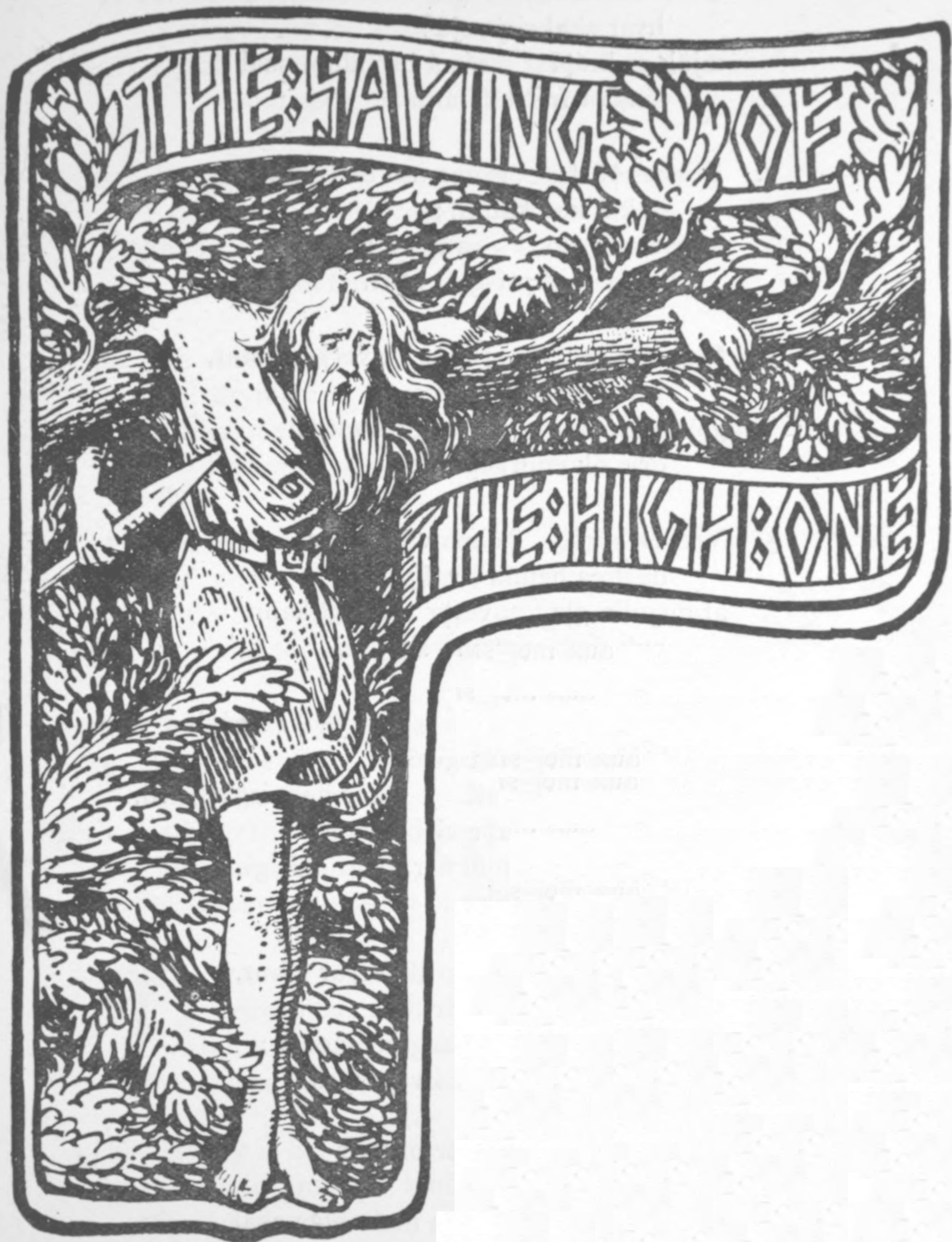
Since the runes’ native home is in the Well of Urd with the Norns, and since the runes do not reveal themselves to any but those who prove themselves worthy of such fearful insights and abilities, Odin hung himself from a branch of Yggdrasil, pierced himself with his spear, and peered downward into the shadowy waters below. He forbade any of the other gods to grant him the slightest aid, not even a sip of water. And he stared downward, and stared downward, and called to the runes.
He survived in this state, teetering on the precipice that separates the living from the dead, for no less than nine days and nights. At the end of the ninth night, he at last perceived shapes in the depths: the runes! They had accepted his sacrifice and shown themselves to him, revealing to him not only their forms, but also the secrets that lie within them. Having fixed this knowledge in his formidable memory, Odin ended his ordeal with a scream of exultation.
Having been initiated into the mysteries of the runes, Odin recounted:
Then I was fertilized and became wise; I truly grew and thrived. From a word to a word I was led to a word, From a work to a work I was led to a work.
Equipped with the knowledge of how to wield the runes, he became one of the mightiest and most accomplished beings in the cosmos. He learned chants that enabled him to heal emotional and bodily wounds, to bind his enemies and render their weapons worthless, to free himself from constraints, to put out fires, to expose and banish practitioners of malevolent magic, to protect his friends in battle, to wake the dead, to win and keep a lover, and to perform many other feats like these.
“Sacrificing Myself to Myself”
Our source for the above tale is the Hávamál, an Old Norse poem that comprises part of the Poetic Edda. In the first of the two verses that describe Odin’s shamanic initiatory ordeal itself (written from Odin’s perspective), the god says that he was “given to Odin, myself to myself.” The Old Norse phrase that translates to English as “given to Odin” is gefinn Óðni, a phrase that occurs many times throughout the Eddas and sagas in the context of human sacrifices to Odin. And, in fact, the form these sacrifices take mirrors Odin’s ordeal in the Hávamál; the victim, invariably of noble birth, was stabbed, hung, or, more commonly, both at the same time.
Odin’s ordeal is therefore a sacrifice of himself to himself, and is the ultimate Odinnic sacrifice – for who could be a nobler offering to the god than the god himself?
So, it seems that a statement above is in need of qualification. Part of Odin survived the sacrifice in order to be the recipient of the sacrifice – in addition to the runes themselves – and another part of him did indeed die. This is suggested, not just by the imagery of death in these verses, but also by the imagery of rebirth and fecundity in the following verses that speak of his being “fertilized,” and, like a seedling, “growing,” and “thriving.”
Even a casual browsing of the Eddas and sagas alerts the reader to how accomplished, self-possessed, and inwardly strong many of their central figures are, especially the most Odinnic of them (such as Egill Skallagrimsson, Starkad, Sigurd, and Grettir Asmundarson). Perhaps their strength of character was largely due to the example set by their divine patron, with the songs sung in his honor telling of how he wasn’t afraid to sacrifice what we might call his “lower self” to his “higher self,” to live according to his highest will unconditionally, accepting whatever hardships arise from that pursuit, and allowing nothing, not even death, to stand between him and the attainment of his goals.

Hávamál stanza 145


Hávamál 138-164
138. Now are Hor's words | spoken in the hall, Kind for the kindred of men, Cursed for the kindred of giants: Hail to the speaker, | and to him who learns! Profit be his who has them! Hail to them who hearken!
139. I ween that I hung | on the windy tree, Hung there for nights full nine; With the spear I was wounded, | and offered I was To Othin, myself to myself, On the tree that none | may ever know What root beneath it runs.
140. None made me happy | with loaf or horn, And there below I looked; I took up the runes, | shrieking I took them, And forthwith back I fell.
141. Nine mighty songs | I got from the son Of Bolthorn, Bestla's father; And a drink I got | of the goodly mead Poured out from Othrörir.
142. Then began I to thrive, | and wisdom to get, I grew and well I was; Each word led me on | to another word, Each deed to another deed.
143. Runes shalt thou find, | and fateful signs, That the king of singers colored, And the mighty gods have made;
Full strong the signs, | full mighty the signs That the ruler of gods doth write.
144. Othin for the gods, | Dain for the elves, And Dvalin for the dwarfs, Alsvith for giants | and all mankind, And some myself I wrote.
145. Knowest how one shall write, | knowest how one shall rede? Knowest how one shall tint, | knowest how one makes trial? Knowest how one shall ask, | knowest how one shall offer? Knowest how one shall send, | knowest how one shall sacrifice?
146. Better no prayer | than too big an offering, By thy getting measure thy gift; Better is none | than too big a sacrifice,
So Thund of old wrote | ere man's race began, Where he rose on high | when home he came.
147. The songs I know | that king's wives know not, Nor men that are sons of men; The first is called help, | and help it can bring thee In sorrow and pain and sickness.
148. A second I know, | that men shall need Who leechcraft long to use;
149. A third I know, | if great is my need Of fetters to hold my foe; Blunt do I make | mine enemy's blade, Nor bites his sword or staff.
150. A fourth I know, | if men shall fasten Bonds on my bended legs; So great is the charm | that forth I may go, The fetters spring from my feet, Broken the bonds from my hands.
152. A fifth I know, | if I see from afar An arrow fly 'gainst the folk; It flies not so swift | that I stop it not, If ever my eyes behold it.
152. A sixth I know, | if harm one seeks With a sapling's roots to send me; The hero himself | who wreaks his hate Shall taste the ill ere I.
153. A seventh I know, | if I see in flames The hall o'er my comrades' heads; It burns not so wide | that I will not quench it, I know that song to sing.
154. An eighth I know, | that is to all Of greatest good to learn; When hatred grows | among heroes' sons, I soon can set it right.
155. A ninth I know, | if need there comes To shelter my ship on the flood; The wind I calm | upon the waves, And the sea I put to sleep.
156. A tenth I know, | what time I see House-riders flying on high; So can I work | that wildly they go, Showing their true shapes, Hence to their own homes.
157. An eleventh I know, | if needs I must lead To the fight my long-loved friends; I sing in the shields, | and in strength they go Whole to the field of fight, Whole from the field of fight, And whole they come thence home.
158. A twelfth I know, | if high on a tree I see a hanged man swing;
So do I write | and color the runes That forth he fares, And to me talks.
159. A thirteenth I know, | if a thane full young With water I sprinkle well; He shall not fall, | though he fares mid the host, Nor sink beneath the swords.
160. A fourteenth I know, | if fain I would name To men the mighty gods; All know I well | of the gods and elves, Few be the fools know this.
161. A fifteenth I know, | that before the doors Of Delling sang Thjothrörir the dwarf; Might he sang for the gods, | and glory for elves, And wisdom for Hroptatyr wise.
162. A sixteenth I know, | if I seek delight To win from a maiden wise; The mind I turn | of the white-armed maid, And thus change all her thoughts.
163. A seventeenth I know, | so that seldom shall go A maiden young from me;
164. Long these songs | thou shalt, Loddfafnir, Seek in vain to sing; Yet good it were | if thou mightest get them, Well, if thou wouldst them learn, Help, if thou hadst them.
Credits
Please let us know if u have not been credited. We are gratefull to all people bringing this wonderful subject back to us.
References:
The writings of Dr. Jackson Crawford and Daniel Mc Coy are a neverending inspiration and most favoured of sources. the blog of Dr. Karl E. H. SeigfriedNorse-mythology.org
Children of Odin Freedomain
sacredtext.com Footnotes to Odin's runes :[138. In the manuscript this stanza comes at the end of the entire poem, following stanza 165. Most recent editors have followed Müllenhoff in shifting it to this position, as it appears to conclude the passage introduced by the somewhat similar stanza 111.
139. With this stanza begins the most confusing part of the Hovamol: the group of eight stanzas leading up to the Ljothatal, or list of charms. Certain paper manuscripts have before this stanza a title: "Othin's Tale of the Runes." Apparently stanzas 139, 140 and 142 are fragments of an account of how Othin obtained the runes; 141 is erroneously inserted from some version of the magic mead story (cf. stanzas 104-110); and stanzas 143, 144, 145, and 146 are from miscellaneous sources, all, however, dealing with the general subject of runes. With stanza 147 a clearly continuous passage begins once more. The windy tree: the ash Yggdrasil (literally "the Horse of Othin," so called be cause of this story), on which Othin, in order to win the magic runes, hanged himself as an offering to himself, and wounded himself with his own spear. Lines 5 and 6 have presumably been borrowed from Svipdagsmol, 30.]
[141. This stanza, interrupting as it does the account of Othin's winning the runes, appears to be an interpolation. The meaning of the stanza is most obscure. Bolthorn was Othin's grandfather, and Bestla his mother. We do not know the name of the uncle here mentioned, but it has been suggested that this son of Bolthorn was Mimir (cf. Voluspo, 27 and note, and 47 and note). In any case, the nine magic songs which he learned from his uncle seem to have enabled him to win the magic mead (cf. stanzas 104-110). Concerning Othrörir, here used as the name of the vessel containing the mead, cf. stanza 107 and note.
143. This and the following stanza belong together, and in many editions appear as a single stanza. They presumably come from some lost poem on the authorship of the runes. Lines 2 and 3 follow line 4 in the manuscript; the transposition was suggested by Bugge. The king of singers: Othin. The magic signs (runes) were commonly carved in wood, then colored red.]
[144. Dain and Dvalin: dwarfs; cf. Voluspo, 14, and note. Dain, however, may here be one of the elves rather than the dwarf of. that name. The two names also appear together in Grimnismol, 33, where they are applied to two of the four harts that nibble at the topmost twigs of Yggdrasil. Alsvith ("the All Wise") appears nowhere else as a giant's name. Myself: Othin. We have no further information concerning the list of those who wrote the runes for the various races, and these four lines seem like a confusion of names in the rather hazy mind of some reciter.
145. This Malahattr stanza appears to be a regular religious formula, concerned less with the runes which one "writes" and "tints" (cf. stanza 79) than with the prayers which one "asks" and the sacrifices which one "offers" and "sends." Its origin is wholly uncertain, but it is clearly an interpolation here. In the manuscript the phrase "knowest?" is abbreviated after the first line.]
[146. This stanza as translated here follows the manuscript reading, except in assuming a gap between lines 3 and 5. In Vigfusson and Powell's Corpus Poeticum Boreale the first three lines have somehow been expanded into eight. The last two lines are almost certainly misplaced; Bugge suggests that they belong at the end of stanza 144. Thund: another name for Othin. When home he came: presumably after obtaining the runes as described in stanzas 139 and 140.
147. With this stanza begins the Ljothatal, or list of charms. The magic songs themselves are not given, but in each case the peculiar application of the charm is explained. The passage, which is certainly approximately complete as far as it goes, runs to the end of the poem. In the manuscript and in most editions line 4 falls into two half-lines, running: "In sickness and pain | and every sorrow." ]
[148. Second, etc., appear in the manuscript as Roman numerals. The manuscript indicates no gap after line 2.
152. The sending of a root with runes written thereon was an excellent way of causing death. So died the Icelandic hero Grettir the Strong.]
[156. House-riders: witches, who ride by night on the roofs of houses, generally in the form of wild beasts. Possibly one of the last two lines is spurious.
157. The last line looks like an unwarranted addition, and line 4 may likewise be spurious.
158. Lines 4-5 are probably expanded from a single line.]
[159. The sprinkling of a child with water was an established custom long before Christianity brought its conception of baptism.
161. This stanza, according to Müllenhoff, was the original conclusion of the poem, the phrase "a fifteenth" being inserted only after stanzas 162-165 had crept in. Delling: a seldom mentioned god who married Not (Night). Their son was Dag (Day). Thjothrörir: not mentioned elsewhere. Hroptatyr: Othin.]
[163. Some editors have combined these two lines with stanza 164. Others have assumed that the gap follows the first half-line, making "so that-from me" the end of the stanza.
164. This stanza is almost certainly an interpolation, and seems to have been introduced after the list of charms and the Loddfafnismol (stanzas 111-138) were combined in a single poem, for there is no other apparent excuse for the reference to Loddfafnir at this point. The words "if thou mightest get them" are a conjectural emendation.